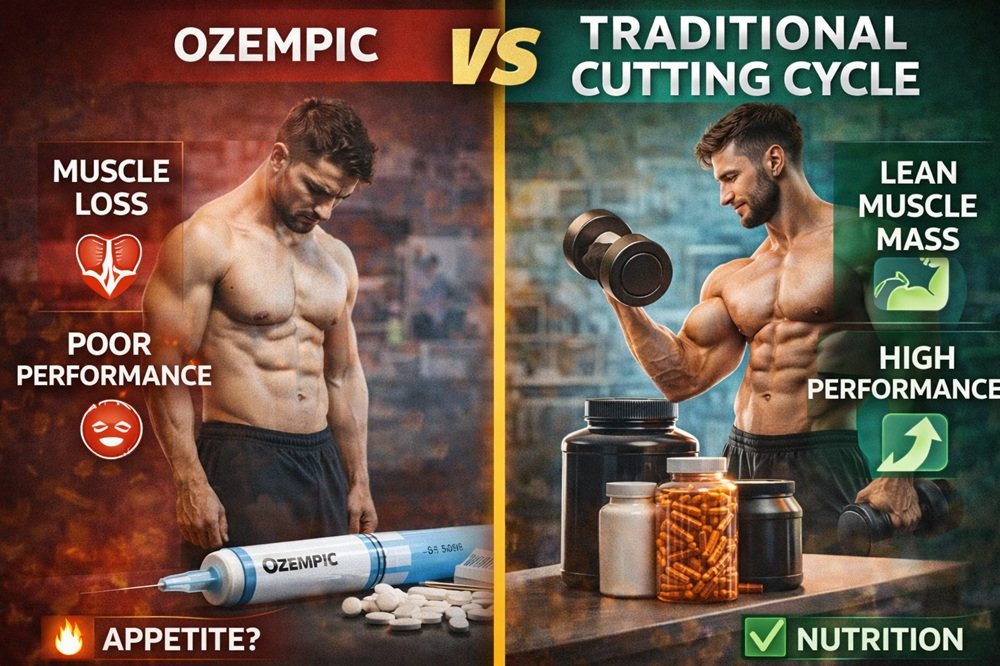
The debate around Ozempic vs cutting cycle is exploding in bodybuilding circles—and not in a good way. As fat-loss drugs go mainstream, more lifters are quietly experimenting with Ozempic to get shredded faster. But what looks like a shortcut can come with serious risks: muscle loss, hormonal disruption, appetite shutdown, and long-term metabolic damage. Below, we break down exactly how Ozempic compares to a traditional cutting cycle, why bodybuilders are misusing it, and the hidden dangers most influencers won’t talk about.
Quick Answer
Quick Answer:
In the Ozempic vs cutting cycle debate, Ozempic causes rapid weight loss by suppressing appetite and slowing gastric emptying, but it significantly increases the risk of lean muscle loss, training performance decline, and hormonal imbalance. A traditional cutting cycle, while slower, preserves muscle mass and long-term metabolic health when done correctly.
What Is Ozempic? (Context Bodybuilders Need)
Ozempic is a prescription medication originally approved for type 2 diabetes, later popularized for weight loss due to its appetite-suppressing effects.
How Ozempic Works
Ozempic (semaglutide) is a GLP-1 receptor agonist that:
- Reduces hunger signals
- Slows digestion
- Increases feelings of fullness
- Lowers total calorie intake automatically
For obese or diabetic patients, this can be medically useful.
For bodybuilders? That’s where problems start.
What Is a Traditional Cutting Cycle?
A cutting cycle is a structured fat-loss phase using:
- Controlled calorie deficit
- High protein intake
- Resistance training
- Strategic cardio
- Hormone-preserving nutrition
The goal isn’t just weight loss—it’s fat loss while preserving lean mass.
Ozempic vs Cutting Cycle: Key Differences (The Meat)
🔴 Appetite Control vs Muscle Preservation
| Factor | Ozempic | Traditional Cut |
|---|---|---|
| Appetite | Artificially suppressed | Managed via diet |
| Muscle retention | ❌ High risk of loss | ✅ Prioritized |
| Training performance | Often declines | Maintained |
| Hormonal health | Can be disrupted | Usually preserved |
| Sustainability | Poor long-term | High when planned |
🔴 Muscle Loss Risk (The Biggest Danger)
Rapid weight loss from Ozempic often includes:
- Loss of lean body mass
- Reduced training intensity
- Lower protein intake due to appetite shutdown
Bodybuilders don’t lose “fat only.” They lose hard-earned muscle.
🔴 Training Performance Collapse
Common Ozempic side effects include:
- Nausea
- Fatigue
- Dizziness
- Low blood sugar sensations
This leads to:
- Skipped workouts
- Reduced volume
- Strength regression
A cut that kills training quality is not a successful cut.
🔴 Hormonal & Metabolic Issues
Bodybuilders already push metabolic stress during a cut. Ozempic can worsen:
- Thyroid output
- Testosterone signaling (indirectly via energy deficit)
- Hunger hormone signaling long-term
Some users report post-Ozempic rebound fat gain once appetite returns.
Why Bodybuilders Are Tempted by Ozempic (And Why It’s a Trap)
The Appeal
- Fast scale weight drop
- No calorie tracking
- “Effortless” fat loss
The Reality
- Flat muscles
- Weak pumps
- Poor gym performance
- Rebound weight gain
- Loss of conditioning look
Ozempic creates a skinny-fat aesthetic, not a stage-ready physique.
Evidence & Trust Signals (Why MuscleGurus Warns Against It)
Across bodybuilding forums and athlete discussions, recurring patterns emerge:
- Users losing strength rapidly
- Visible muscle shrinkage
- Difficulty eating enough protein
- Post-cycle fat regain
In contrast, lifters using proper cutting cycles consistently maintain muscle fullness and gym performance.
Key takeaway: drugs designed for disease treatment are not physique-enhancement tools.
FAQ: Ozempic vs Cutting Cycle
Q: Is Ozempic safe for bodybuilders?
A: Ozempic is not designed for athletic fat loss and carries a high risk of muscle loss and performance decline.
Q: Does Ozempic burn fat or just reduce appetite?
A: It reduces appetite. Fat loss occurs indirectly from severe calorie reduction, often alongside muscle loss.
Q: Can Ozempic be combined with lifting safely?
A: Even with lifting, many users fail to consume enough protein or calories to preserve muscle.
Q: What’s safer for contest prep?
A: A traditional cutting cycle with proper nutrition, resistance training, and recovery management.
Conclusion & CTA
In the Ozempic vs cutting cycle debate, the answer is clear: shortcuts come with long-term costs. Ozempic may reduce scale weight fast, but it compromises muscle, performance, and metabolic health—everything bodybuilders care about.
👉 Want a cutting plan that actually preserves muscle?
Check out our Bodybuilding Nutrition & Cutting Guides on MuscleGurus and join the discussion with experienced lifters.
Medical Disclaimer
This article is for educational purposes only and does not constitute medical advice. Ozempic is a prescription medication. Do not use any drug without consulting a qualified healthcare professional.