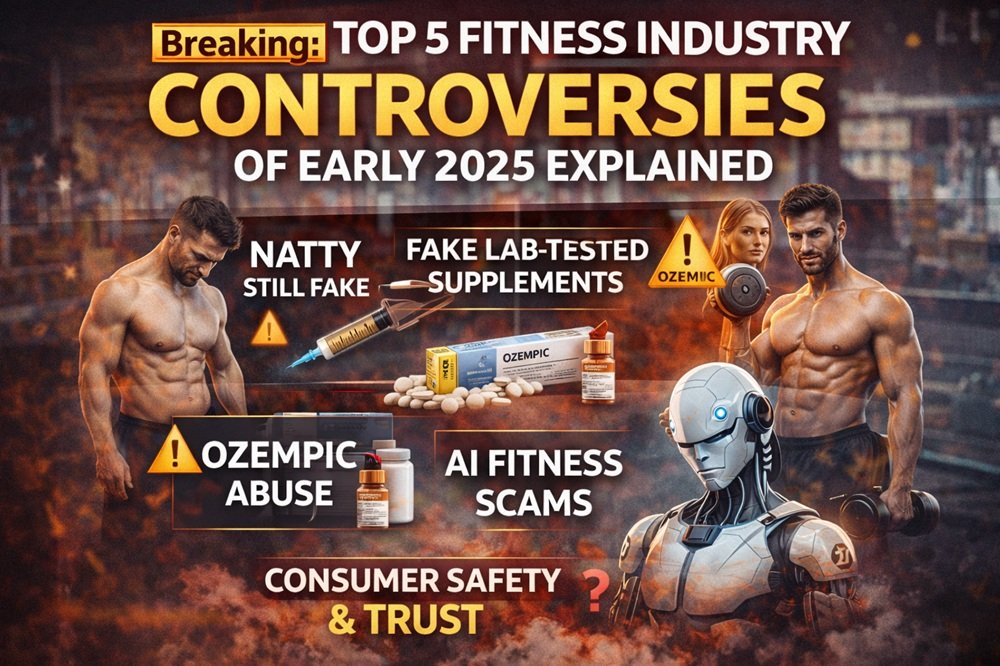
The fitness industry controversies 2025 have exposed uncomfortable truths about supplements, influencers, drugs, and corporate ethics. From fake “natty” claims to AI fitness scams and pharmaceutical misuse, early 2025 has already shaken consumer trust. If you train seriously—or spend money in this industry—you need to know what happened, who was involved, and why it matters. Below is a clear, no-hype breakdown of the top 5 fitness industry controversies of early 2025, explained for lifters, coaches, and everyday gym-goers.
Quick Answer
Quick Answer:
The biggest fitness industry controversies 2025 include influencer steroid deception, Ozempic misuse for fat loss, fake lab-tested supplements, AI coaching scams, and manipulated transformation marketing—raising major concerns around consumer safety and trust.
Controversy #1: Influencer “Natty” Claims Exposed
What Happened
Multiple high-profile fitness influencers were exposed—via leaked messages, inconsistent bloodwork claims, and insider testimony—for secretly using PEDs while marketing themselves as “lifetime natural.”
Why It Matters
- Misleads beginners into unrealistic expectations
- Drives unsafe supplement and training decisions
- Undermines legitimate natural competitors
Industry Fallout
- Brands quietly dropping sponsored athletes
- Audiences demanding transparency disclosures
- Renewed calls for “enhanced vs natural” labeling standards
This remains one of the most damaging fitness industry controversies 2025 because it targets trust at the influencer level.
Controversy #2: Ozempic Abuse in the Fitness Scene
What Happened
Prescription GLP-1 drugs like Ozempic were increasingly used by non-obese fitness influencers to accelerate fat loss—without disclosure.
Why It Matters
- Promotes drug misuse
- Causes muscle loss and metabolic issues
- Sets dangerous body image standards
Regulatory Attention
Medical associations and fitness platforms began flagging undisclosed pharmaceutical use as deceptive marketing.
This controversy overlaps with health ethics, making it a key pillar of the fitness industry controversies 2025 discussion.
Controversy #3: Fake “Lab-Tested” Supplements Exposed
What Happened
Several supplement brands were caught:
- Using forged Certificates of Analysis (COAs)
- Copy-pasting lab reports from unrelated products
- Claiming “third-party tested” without proof
Why It Matters
- Consumers ingest unknown substances
- Risk of banned or toxic compounds
- Undermines legitimate supplement companies
Industry Response
Retailers began demanding verifiable lab access, not PDFs—hinting at a wider cleanup phase.
Controversy #4: AI Fitness Coaching Scams
What Happened
AI-generated fitness programs exploded—but many were:
- Auto-generated PDFs sold as “custom coaching”
- Created without trainer oversight
- Linked to injury complaints and refund disputes
Why It Matters
- Unsafe programming for beginners
- Zero accountability
- Devalues real coaching professionals
Platform Crackdowns
Some marketplaces started labeling AI-generated fitness products, but enforcement remains inconsistent.
This marks a new-era controversy unique to the fitness industry controversies 2025 landscape.
Controversy #5: Manipulated Transformations & Editing Fraud
What Happened
Investigations revealed:
- Extreme photo editing
- Dehydration tricks
- Strategic lighting marketed as “30-day transformations”
Why It Matters
- Unrealistic expectations
- Mental health impacts
- False advertising
Consumer Backlash
Audiences began demanding:
- Raw check-ins
- Timeline transparency
- Verified client testimonials
This controversy has reignited debates around ethical marketing in fitness.
Evidence & Trust Signals (Why MuscleGurus Covers This)
Across fitness forums, coaching communities, and consumer review platforms, early-2025 discussions show:
- Rising skepticism of influencer claims
- Increased demand for transparency
- Preference for education over hype
The fitness industry controversies 2025 aren’t isolated scandals—they reflect systemic problems that affect every lifter spending money in this space.
FAQ: Fitness Industry Controversies 2025
Q: Why are there so many fitness controversies in 2025?
A: Rapid influencer growth, weak regulation, and social media monetization have outpaced accountability.
Q: Are supplements becoming safer or riskier?
A: Safer long-term, but riskier short-term as bad actors are exposed.
Q: Should consumers trust fitness influencers?
A: Only those who disclose methods, show credentials, and provide verifiable evidence.
Q: Is regulation coming?
A: Yes—especially for supplements and medical claims—but enforcement takes time.
Conclusion & CTA
The fitness industry controversies 2025 serve as a warning: question claims, verify sources, and avoid shortcuts. Education—not hype—is the safest path to results.
👉 Want honest discussions without influencer filters?
Join the MuscleGurus community to break down claims, reviews, and real-world results with experienced lifters.
Medical & Legal Disclaimer
This article is for informational purposes only. It does not constitute medical, legal, or professional advice. Always consult qualified professionals before making health or training decisions.