

Introduction: Muscle Growth Science Explained Simply
Muscle growth science is often misunderstood in the fitness world. Many lifters believe soreness equals growth, or that chasing the pump is the key to building muscle. In reality, hypertrophy is driven by specific physiological mechanisms that have been studied extensively.
If you want to build muscle effectively, you need to understand what actually triggers hypertrophy—not gym myths. In this guide, we’ll break down the three main drivers: mechanical tension, metabolic stress, and muscle damage, and explain which ones truly matter.
Quick Answer
Quick Answer:
According to muscle growth science, hypertrophy is primarily driven by mechanical tension through progressive overload. Metabolic stress supports growth, while muscle damage is not required and is often overstated.
Table of Contents
- What Is Muscle Growth Science?
- Mechanical Tension (Primary Driver)
- Metabolic Stress (Secondary Factor)
- Muscle Damage (Commonly Misunderstood)
- How These Factors Work Together
- Practical Training Application
- Common Hypertrophy Myths
- FAQs
- Final Verdict
What Is Muscle Growth Science?
Muscle growth science refers to the biological processes that cause muscles to grow after resistance training.
Hypertrophy occurs when:
- Muscle fibers experience stress
- The body repairs them
- Fibers grow thicker and stronger
According to research summarized by Examine.com , progressive resistance training is the most reliable way to stimulate hypertrophy.
Mechanical Tension: The Most Important Trigger


What Is Mechanical Tension?
Mechanical tension occurs when muscles contract against resistance, especially under load and stretch.
Why It Matters
- Activates muscle-building pathways
- Increases muscle protein synthesis
- Drives long-term hypertrophy
How to Apply It
- Use progressive overload
- Focus on controlled reps
- Train through full range of motion
Mechanical tension is the foundation of muscle growth science.
What Is Mechanical Tension?
Mechanical tension occurs when muscles contract against resistance, especially under load and stretch.
Why It Matters
- Activates muscle-building pathways
- Increases muscle protein synthesis
- Drives long-term hypertrophy
How to Apply It
- Use progressive overload
- Focus on controlled reps
- Train through full range of motion
👉 Internal link: How to Gain Muscle Fast Naturally
Metabolic Stress: The Pump Effect

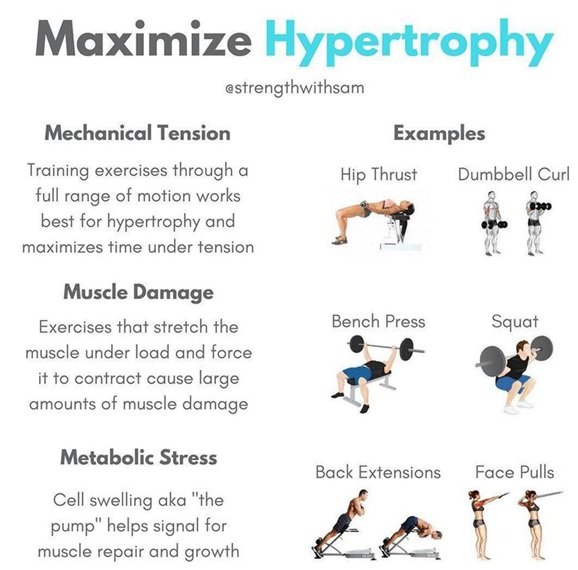
What Is Metabolic Stress?
Metabolic stress occurs when metabolites build up during exercise, creating the “pump” sensation.
Benefits
- Increases cell swelling
- Enhances muscle fiber recruitment
- Supports hypertrophy indirectly
How to Use It
- Higher rep ranges (10–15 reps)
- Short rest periods
- Isolation exercises
However, metabolic stress alone is not enough without mechanical tension.
Muscle Damage: The Most Overhyped Factor


What Is Muscle Damage?
Muscle damage refers to micro-tears caused by intense or unfamiliar exercise.
Does It Build Muscle?
Not directly.
Research shows:
- Muscle damage is not required for hypertrophy
- Excess damage can slow recovery
- Soreness is not a growth indicator
👉 External resource : https://www.healthline.com
This is one of the biggest misconceptions in muscle growth science.
How These Factors Work Together
The three mechanisms interact, but not equally:
- Mechanical tension → primary driver
- Metabolic stress → supportive
- Muscle damage → secondary or optional
For optimal hypertrophy, your training should prioritize tension first, then volume and metabolic stress.
Practical Application of Muscle Growth Science
To apply muscle growth science, focus on:
1. Progressive Overload
Increase:
- weight
- reps
- sets
2. Training Volume
- 10–20 sets per muscle group per week
3. Training Frequency
- Train each muscle 2× per week
4. Recovery
- 7–9 hours sleep
- Proper nutrition
👉 Internal link: Muscle Gain Workout Plan
👉 Internal link: Push Pull Legs Routine
Common Hypertrophy Myths
Myth 1: Soreness = Growth
False. Growth can occur without soreness.
Myth 2: More Volume = More Muscle
False. Excess volume can reduce recovery.
Myth 3: Pump Training Builds Muscle Alone
False. Mechanical tension is required.
FAQs: Muscle Growth Science
What is the most important factor in muscle growth?
Mechanical tension is the primary driver of hypertrophy.
Is muscle damage necessary for growth?
No. It’s not required and can hinder recovery if excessive.
Can beginners build muscle faster?
Yes, beginners experience faster gains due to higher responsiveness.
What rep range is best for hypertrophy?
6–12 reps is the most effective range for muscle growth.
Final Verdict: Train Based on Science, Not Myths
Understanding muscle growth science allows you to train smarter and more effectively.
Focus on:
- progressive overload
- controlled volume
- proper recovery
Avoid chasing soreness or gimmicks.
When you prioritize the right mechanisms, hypertrophy becomes predictable and sustainable.