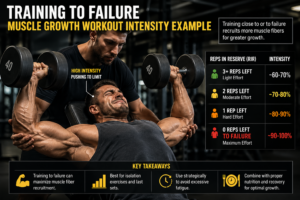
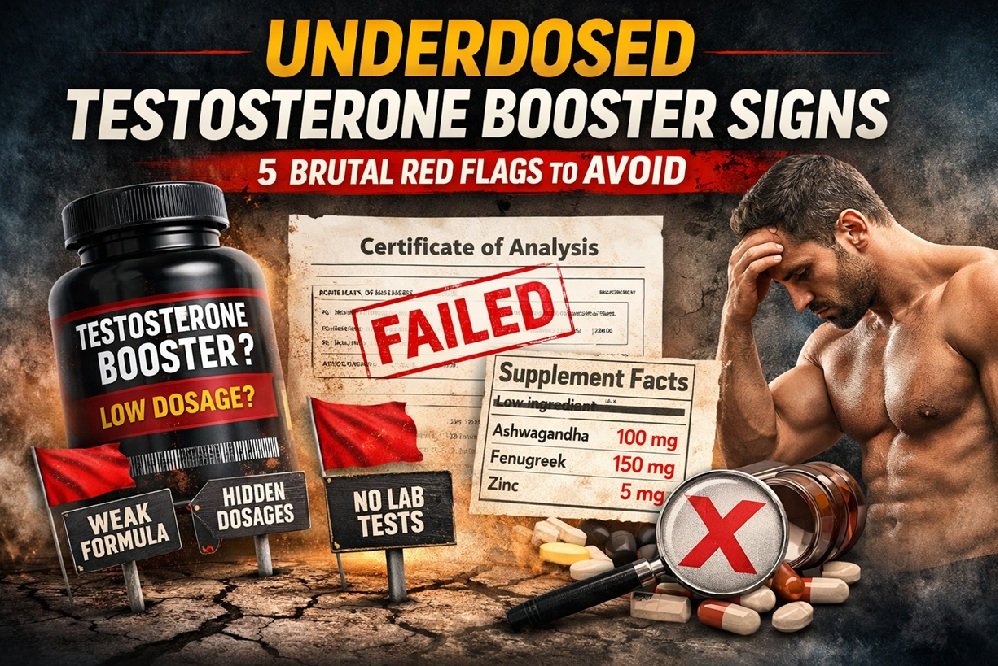
Underdosed testosterone booster signs are far more common than most supplement brands want you to realize. Testosterone boosters promise increased energy, strength, libido, and muscle—but many fail to deliver because they’re severely underdosed.
In this guide, you’ll learn how to spot underdosed testosterone boosters, why brands do it, what the science actually supports, and what to buy instead if you want real results.
This article is designed to help you avoid wasting money—and protect your health.
Quick Answer (Featured Snippet Bait)
Quick Answer:
The most common underdosed testosterone booster signs include proprietary blends, ingredient doses below clinical levels, lack of third-party testing, no noticeable effects after 4–6 weeks, and missing key micronutrients like zinc or magnesium. Effective boosters disclose full dosages and meet research-backed thresholds.
Table of Contents
- What Does “Underdosed Testosterone Booster” Mean?
- Why Most Testosterone Boosters Are Underdosed
- Underdosed Testosterone Booster Signs (The Big 5)
- Ingredients That Are Commonly Underdosed
- What to Buy Instead (Smarter Alternatives)
- FAQs
- Final Verdict
What Does “Underdosed Testosterone Booster” Mean?
An underdosed testosterone booster contains ingredients at amounts too low to produce any meaningful physiological effect—even if those ingredients are scientifically valid at proper doses.
In other words:
✔ Good ingredient
❌ Bad dosage
Understanding underdosed testosterone booster signs helps you evaluate supplements beyond marketing claims.
Why Most Testosterone Boosters Are Underdosed
Brands underdose for three main reasons:
- To reduce manufacturing costs
- To fit multiple ingredients into one capsule
- To hide weak formulas behind “proprietary blends”
This is why label reading is essential.
Underdosed Testosterone Booster Signs (5 You Must Watch For)
1. Proprietary Blends (Major Red Flag)
If the label lists a blend instead of exact doses, you’re likely dealing with an underdosed product.
Why it matters: You can’t verify clinical dosages.
2. Ingredient Doses Below Clinical Levels
Many boosters include ingredients like ashwagandha or fenugreek—but at doses far below what studies use.
Example:
- Ashwagandha effective dose: 600 mg/day
- Many boosters include: 100–200 mg
That’s an underdosed testosterone booster sign.
3. No Results After 4–6 Weeks
Natural testosterone boosters are subtle—but not invisible.
If you experience:
- No energy improvement
- No libido change
- No training performance difference
…your product is likely underdosed.
4. Missing Essential Micronutrients
Zinc, magnesium, and vitamin D are foundational for testosterone production.
An underdosed booster often:
- Excludes them
- Includes them below RDA levels
According to Healthline, micronutrient deficiencies can directly impact testosterone levels.
5. No Third-Party Lab Testing
If there’s no Certificate of Analysis (COA), you can’t verify dosage accuracy.
This is one of the most overlooked underdosed testosterone booster signs.
Ingredients Most Commonly Underdosed
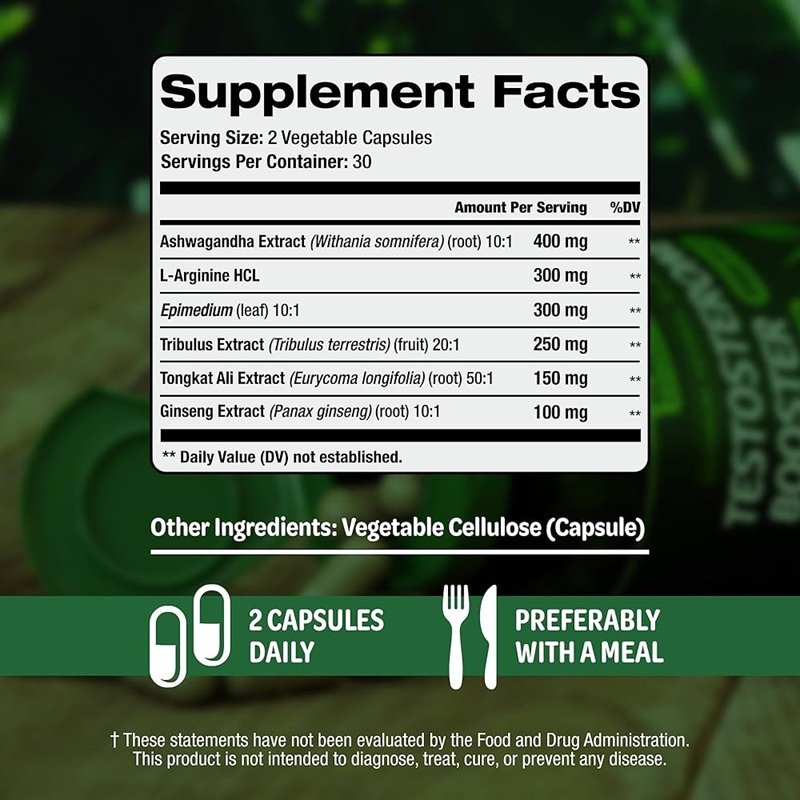
Watch out for these:
- Ashwagandha
- Fenugreek
- Tribulus terrestris
- D-Aspartic Acid
- Tongkat Ali
Evidence-based dosage data from Examine.com clearly shows that most commercial boosters fall short.
What to Buy Instead (Smarter Options)
Instead of multi-ingredient underdosed blends, consider:
Option 1: Single-Ingredient Supplements
- Ashwagandha (600 mg/day)
- Zinc (if deficient)
- Vitamin D (if deficient)
Option 2: Lifestyle-First Testosterone Support
- Sleep optimization
- Resistance training
- Caloric adequacy
Option 3: Transparent, Fully-Dosed Formulas
Look for:
- Full dosage disclosure
- Third-party testing
- Clinically supported ingredient amounts
👉 Internal resource: Read our guide on how to interpret supplement lab test results to verify quality.
FAQs: Underdosed Testosterone Booster Signs
Do testosterone boosters actually work?
Some can help marginally—only if properly dosed and combined with lifestyle support.
Are proprietary blends always bad?
Not always, but they prevent dose verification.
How long should a testosterone booster take to work?
Typically 4–8 weeks for noticeable effects.
Is underdosing dangerous?
It’s usually ineffective rather than dangerous—but misleading.
Internal & External Resources
- 👉 Internal: Best evidence-based testosterone support supplements
- 👉 External : Ingredient research at Examine.com
- 👉 External : Testosterone health overview from Healthline
Final Verdict: Don’t Pay for Fairy Dust
The biggest takeaway from these underdosed testosterone booster signs is simple: most products fail because they’re designed for marketing—not effectiveness.
If a brand hides dosages, avoids lab tests, or stacks dozens of ingredients into tiny capsules, walk away.
Buy transparency—or buy nothing.
Medical Disclaimer
This content is for educational purposes only and does not constitute medical advice. Supplements are not intended to diagnose, treat, cure, or prevent disease. Always consult a qualified healthcare professional before using testosterone-related supplements.